

Straightening teeth is a months-long commitment, so the provider you pick matters as much as the appliance you end up wearing. Choosing the right orthodontist comes down to four things: training, diagnostics, the range of treatment options offered, and how clearly a practice communicates with you from start to finish. Here’s how to sort through your options without second-guessing yourself.
What Does It Mean to Choose the Right Orthodontist?
Choosing the right orthodontist means selecting a dental specialist who completed two to three additional years of residency training, depending on the program, focused on tooth movement, jaw alignment, and bite correction. Orthodontists limit their practice to braces, aligners, and bite issues. They don’t perform general dentistry, so their entire day centers on straightening smiles.
That extra training matters. Out of 100 dental school graduates, only about six go on to become orthodontists.
Two credentials tell you the most at a glance: board certification through the American Board of Orthodontics and membership in the American Association of Orthodontists (AAO). Both signal that a provider met specialty standards and keeps up with continuing education.
Still, credentials alone don’t make someone the right pick for you. The best match also fits your case complexity, your preferred treatment style, and the way you like to communicate. A parent of a seven-year-old and an adult considering Invisalign are looking for different things.
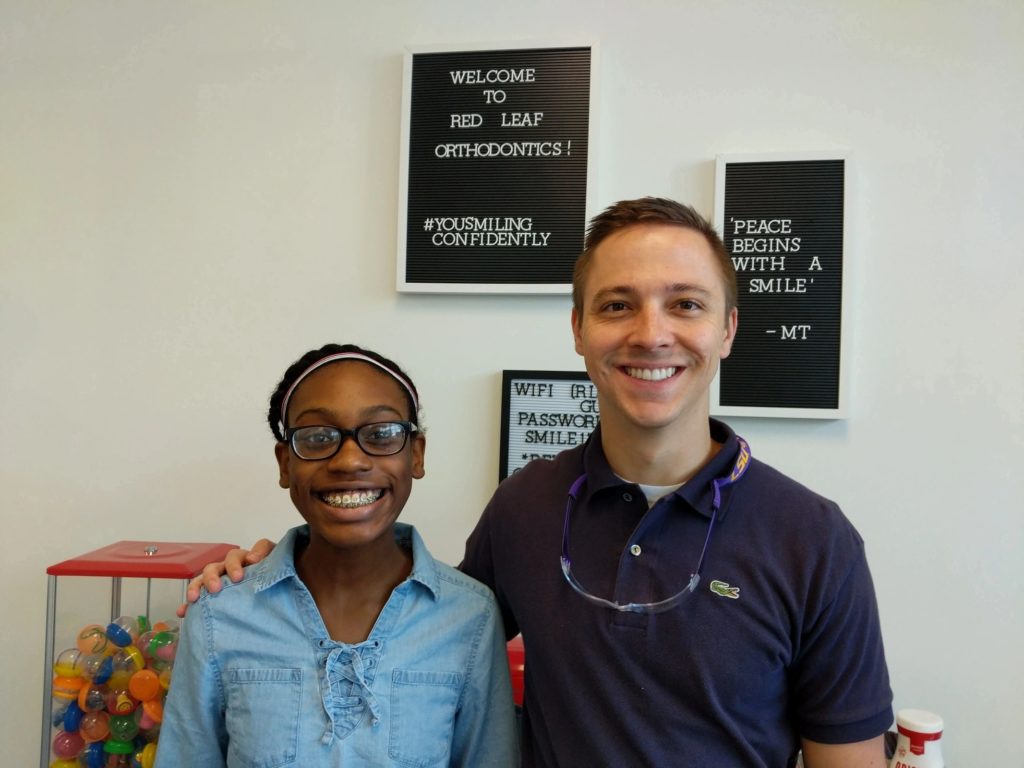
At Red Leaf Orthodontics, every new patient starts with a free consultation. You get to see the office, meet Dr. Tyler Twomley, and hear a real plan before you commit to anything.
How to Evaluate and Choose an Orthodontist: A Step-by-Step Process
Work through six steps: verify credentials, review the full treatment menu, book a free consultation and review the diagnostics, find out who performs your adjustments, compare fees line by line, and weigh communication and convenience. Take them in that order and the real differences between practices show up quickly.
These six steps make it easier to compare providers.
1. Verify credentials first.
Confirm the provider completed an accredited orthodontic residency after dental school. Dr. Twomley completed ten years of training in total: four years of undergraduate study, four years of dental school, and a two-year orthodontic residency. Residency length varies from one program to the next, which is why you’ll see a two- to three-year range quoted. Ask about board certification and AAO membership too.
2. Review the full treatment menu.
A practice offering only one appliance may steer you toward it by default. Look for metal braces, clear braces, Invisalign, and Invisalign for Teens under one roof.
3. Book a free consultation and ask to see diagnostics.
You should leave with a written customized treatment plan, not a vague estimate. Ask what records they take. Digital photographs and a 3D scan give a far clearer picture than a visual exam alone.
4. Find out who actually does the adjustments.
Ask whether Dr. T handles wire changes and progress checks personally, or whether that’s delegated. Then ask how after-hours emergencies work. A loose bracket on a Friday night shouldn’t leave you guessing.
5. Compare fees line by line.
Request a total figure, then confirm what’s inside it. Records, adjustment visits, retainers, and Invisalign refinements are all common add-ons at some practices.
6. Judge communication and convenience last.
Did the team answer questions without rushing? Are appointment times workable around school and work? Treatment lasts many months, so these details add up.
Why Choosing the Right Orthodontist Matters for Your Results
The provider you pick shapes both your result and how smooth the process feels. Here’s where that difference tends to show up most.
- Sharper diagnosis. Specialty training builds pattern recognition for crowding, spacing, overbite, underbite, and crossbite. Subtle findings get caught early.
- Better appliance selection. Matching the right approach to the right case avoids extended wear time and the frustration of retreatment later.
- Big-picture planning. Good orthodontic care looks at jaw growth, airway, TMJ comfort, and facial balance. Straight front teeth alone aren’t the goal.
- Healthier long-term outcomes. Well-aligned teeth are easier to brush and floss around, which supports gum and enamel health for decades.
- Fewer surprises. Consistent oversight from one provider keeps timelines and costs predictable.
- More comfort and confidence. When you understand what happens at each stage, appointments stop feeling like a mystery.
Straight teeth that respond well to orthodontic treatment also tend to be less prone to wear, chipping, and trauma. That’s a benefit you keep long after the last bracket comes off.
Dr. Twomley and the team at Red Leaf Orthodontics walk through the reasoning behind each recommendation, including the trade-offs. You should always know why an option was suggested.
Orthodontist vs. General Dentist vs. DIY Aligner Companies
An orthodontist is a specialist trained specifically to move teeth and correct bites. A general dentist is a generalist who may offer aligners for straightforward cases, while a mail-order aligner company ships trays with no in-person exam at all. The real gap between the three comes down to supervision.
An orthodontist completes two to three years of specialty residency and treats simple through complex bite problems with in-person exams and imaging. A general dentist may offer aligners, though training varies widely and complex cases are often referred out. Mail-order aligner companies provide no in-person exam, no imaging, and no hands-on adjustments.
The side-by-side view below makes those differences easy to spot at a glance, so you can weigh them without digging through fine print.
| Orthodontist | General Dentist | Mail-Order Aligners | |
|---|---|---|---|
| Training beyond dental school | 2-3 year accredited orthodontic residency | Varies; often short courses | None (no clinician on site) |
| Diagnostic imaging | Digital photographs, 3D scan, and complete diagnostic records | Sometimes | Typically none |
| In-person supervision | Every visit, in office | Varies by practice | Remote only |
| Case complexity handled | Simple to complex, including jaw and bite issues | Usually mild to moderate | Mild crowding or spacing only |
| Emergency support | Same-practice, hands-on care | Varies | Phone or email only |
| Appliance range | Braces, clear braces, Invisalign, expanders, retainers | Limited | One aligner system |
It comes down to this. The more complex your bite and the more supervision your case needs, the stronger the argument for a specialist.
Mild spacing might respond to almost any approach. A crossbite with jaw asymmetry will not.
What Affects the Cost of Orthodontic Treatment
Orthodontic treatment cost depends on five main factors: how complex your case is, how long treatment runs, which appliance you choose, whether retainers are included, and how many follow-up visits your plan requires. Metal braces are typically the most economical option. Clear braces and Invisalign pricing varies by case, not by a flat rate.
Here’s what usually moves the number:
- Case complexity. A minor alignment correction costs less than full bite correction involving jaw relationships.
- Treatment length. Longer plans mean more visits and more chair time.
- Appliance type. Metal, clear braces, and Invisalign each carry different lab and material costs.
- Retainers and refinements. Some quotes include them. Some don’t.
- Records and diagnostics. Ask whether digital photographs and the 3D scan are bundled in.
Ways to bring down what you actually pay:
- Orthodontic insurance benefits, which often work as a lifetime maximum rather than an annual one
- FSA and HSA dollars
- Convenient payment options spread across the treatment period
One more thing to be clear about: the lowest quoted number rarely equals the best value. Compare what’s included, not just the total. A lower price that excludes retainers isn’t actually lower. Part of choosing the right orthodontist is knowing exactly what your fee covers before you sign anything.
Red Leaf Orthodontics reviews full treatment costs during your free consultation, so you see the whole picture before deciding anything.

Who Should Start Looking for an Orthodontist, and When
The AAO recommends a first orthodontic evaluation by age 7. By seven, enough permanent teeth have come in for a specialist to spot developing bite and jaw growth issues while some baby teeth remain. Early evaluation doesn’t always lead to early treatment. It gives you information and timing.
Children (ages 7-10)
An early look can guide jaw growth, create room for crowded teeth, and sometimes reduce how much treatment is needed later. For many kids, that’s how you get a head start on a beautiful smile well before the bigger work begins.
Teens
Most permanent teeth have erupted, which makes this a natural window for metal braces or Invisalign for Teens. Busy families often appreciate that Invisalign for Teens means no emergency visits for broken wires or brackets.
Adults
Age isn’t a barrier. Alignment, bite correction, and shifting after old orthodontic treatment are all treatable. Adult care is one of the fastest growing parts of the field.
Signs it’s time to schedule a look:
- Crowded or overlapping teeth
- Noticeable gaps
- Upper and lower teeth that don’t meet correctly
- Jaw clicking, popping, or discomfort
- Teeth that have shifted since previous braces
Good candidates have healthy teeth and gums and are ready to keep appointments and follow wear instructions. That last part matters more than most people expect.
Frequently Asked Questions About Choosing an Orthodontist
What makes a good orthodontist?
A good orthodontist holds specialty residency training, uses real diagnostics like digital photographs and a 3D scan of your teeth rather than a visual guess, and offers more than one treatment option. Clear communication matters just as much. You should understand your plan, your timeline, and your total cost before you say yes.
Is an orthodontist better than a dentist for braces?
For complex bites, yes. Orthodontists spend two to three years after dental school studying tooth movement and jaw relationships exclusively, and they treat these cases daily. Some general dentists offer aligners for mild cases and refer more involved ones out. If your case involves bite correction, jaw growth, or significant crowding, a specialist is the safer choice.
How many orthodontists should I consult before deciding?
Two or three is common and completely normal. Second opinions are a routine part of orthodontics, and no reputable practice will be offended by one. Different providers may propose different approaches, and hearing the reasoning behind each one helps you choose with confidence.
What questions should I ask at a consultation?
Ask what the specific plan involves, how long treatment will take, what the total cost covers, and who performs your adjustments. Also ask how emergencies are handled outside regular hours. Write your questions down beforehand so nothing gets forgotten in the moment.
Can I switch orthodontists mid-treatment?
Yes. People move, schedules change, and sometimes a practice just isn’t the right fit. Your records transfer to the new provider, who will review your existing plan and may adjust it. Expect a new evaluation and a fresh financial agreement covering the remaining care.
Does a free consultation obligate me to treatment?
No. A free consultation is an evaluation and a conversation, nothing more. At Red Leaf Orthodontics, Dr. T and the team gather some information, give you a tour, take digital photographs and an easy breezy 3D scan, and talk through what’s possible. You leave with a plan and zero pressure to schedule anything.
Putting It All Together
Picking the right provider shouldn’t feel like a guessing game. Compare training, diagnostics, treatment options, and cost transparency, then pay attention to how a team treats you in person.
Red Leaf Orthodontics is a family-owned, local orthodontics office built from scratch by Dr. Twomley and his wife, Amanda. The approach here is high-tech & home-grown: current technology, familiar faces, and a team that knows your name and your schedule.
If you’d like a second set of eyes on your options, a free consultation is an easy place to begin, with no obligation attached. Because you deserve a stunning smile, from our family to yours.